
With the Healthbox 3.0 (C+) and Endura Delta (D), Renson has the right ventilation system for every type of central ventilation system, whether the choice is demand-controlled ventilation with a natural supply of fresh air or a fully mechanical (balance) ventilation system D with heat recovery. As a total supplier of a healthy and comfortable indoor climate, Renson also has the Endura Twist, a decentralised ventilation system with heat recovery, in its range.
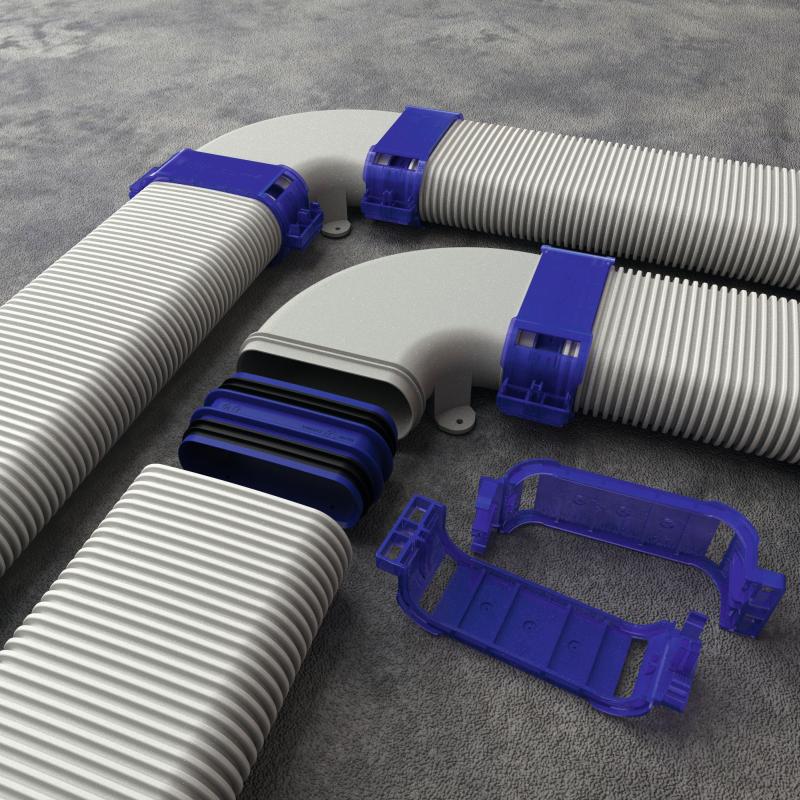
And it goes even further because Renson also has window ventilation grilles in its range for those who opt for natural ventilation. Furthermore, (fltr) extraction grilles, a flexible double-walled air duct system (Easyflex), and even a design roof duct are also available under the same brand name. In short, Renson bundles every high-quality component for a properly functioning ventilation system. In combination with a solid installation, this results in the best possible total installation for a healthy and comfortable indoor climate.
Healthbox 3.0: a new step in ease of installation
Saves time in installation, site management, and follow-up
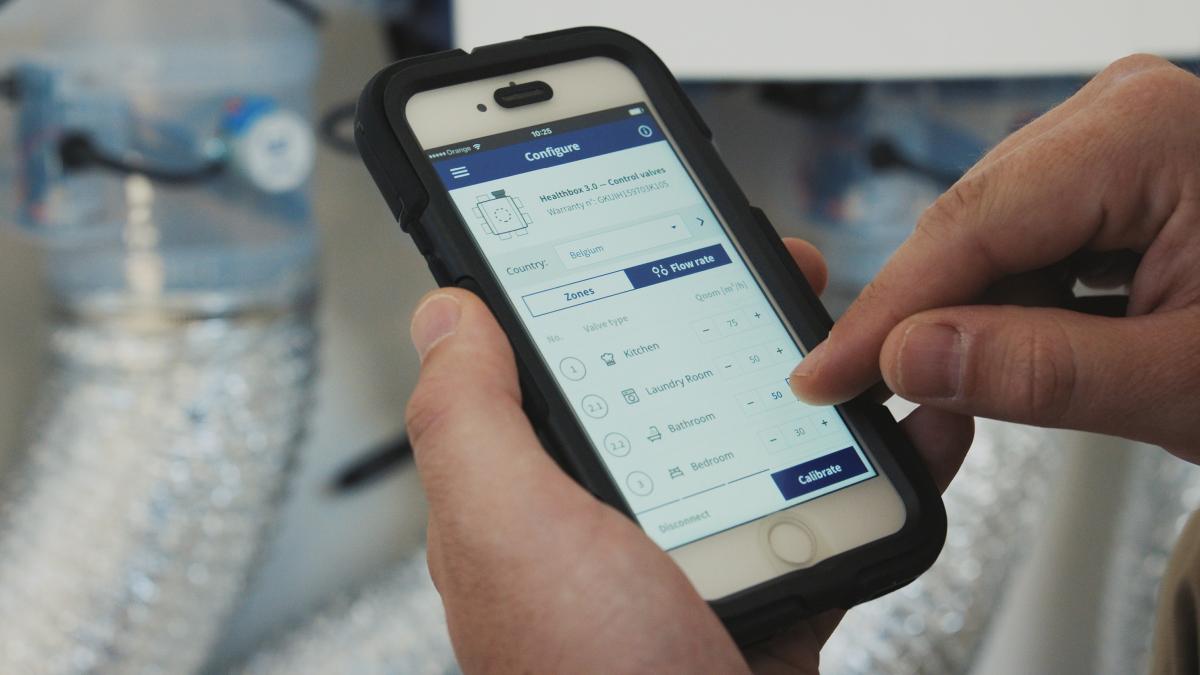
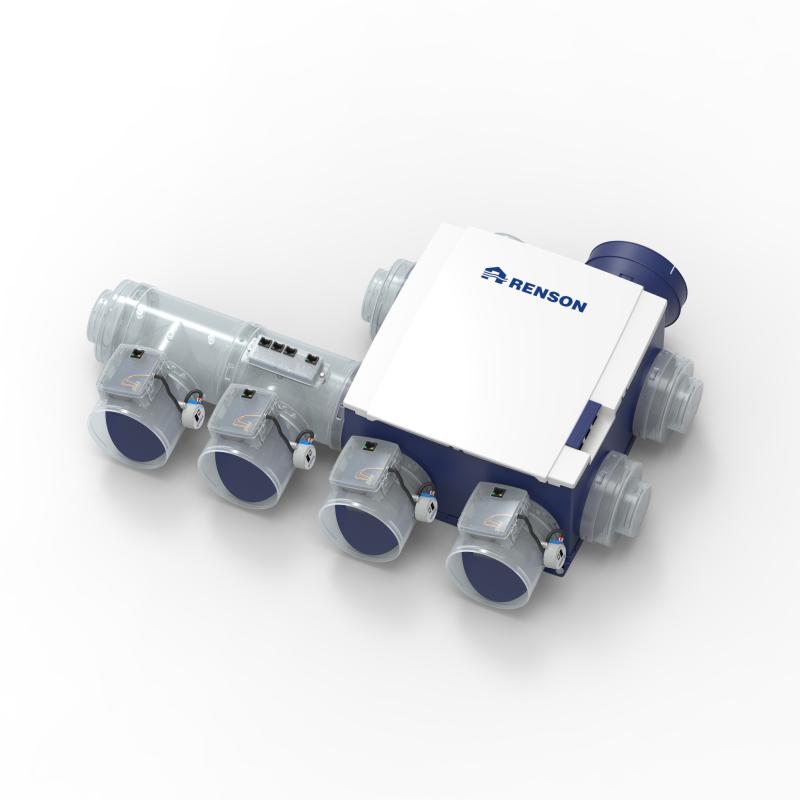
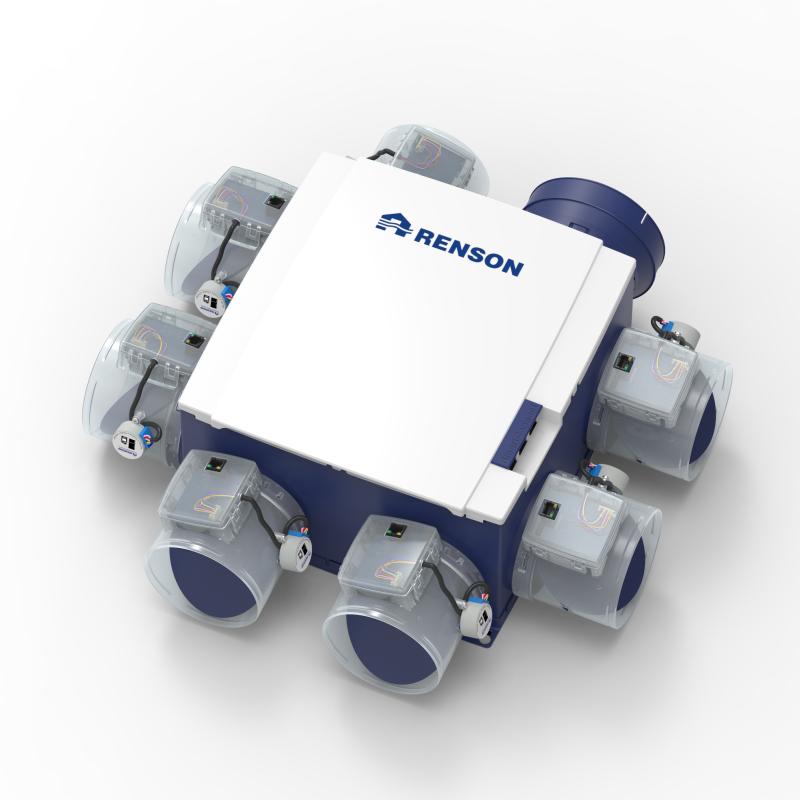
Healthbox 3.0 from Renson – as part of the C+ ventilation system – provides healthy air in the home in a smart and fully automated way. This connected, demand-controlled ventilation unit is ready for all ‘smart homes’ because from now on, it communicates with you as an installer as well as with the resident, each via a corresponding application. The installation and adjustment of the ventilation via the app becomes even more practical for you as an installer.
And that’s not all because you also have access to the ‘My Lio’ web portal where you can manage all your installations, from preparation to follow-up. In other words, this portal gives you a clear overview at a glance of the status of your projects and all the administration associated with them.
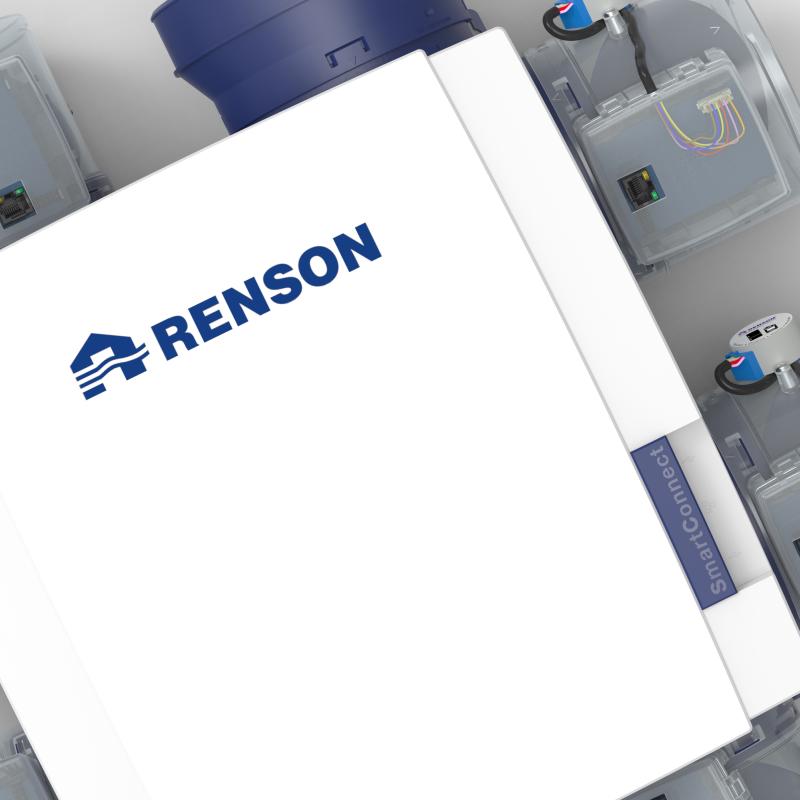
The Healthbox 3.0 monitors the indoor air quality for moisture, CO2, and/or VOCs (odours) via the built-in sensors. The unit automatically adjusts the ventilation level so that it only ventilates there when needed in an energy-efficient way. The SmartConnect connection also turns Healthbox 3.0 into a connected ventilation system that is not only ready for smart homes, but especially for you as an installer, so that you can save a lot of time during the installation and follow-up. The specially developed installer application for Healthbox 3.0 guides you through the entire installation process, adjustment, and calibration. The configuration and all parameters such as pressure drop, set flow rate, etc. are visualised. From now on, the flow adjustments will also be made via the app, with Healthbox 3.0 adapting immediately.
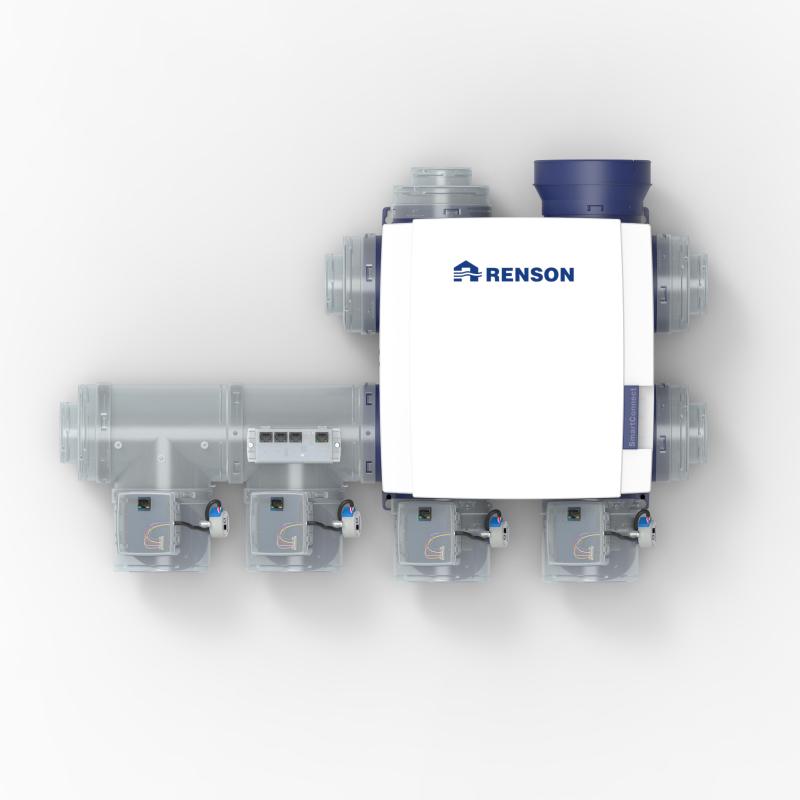
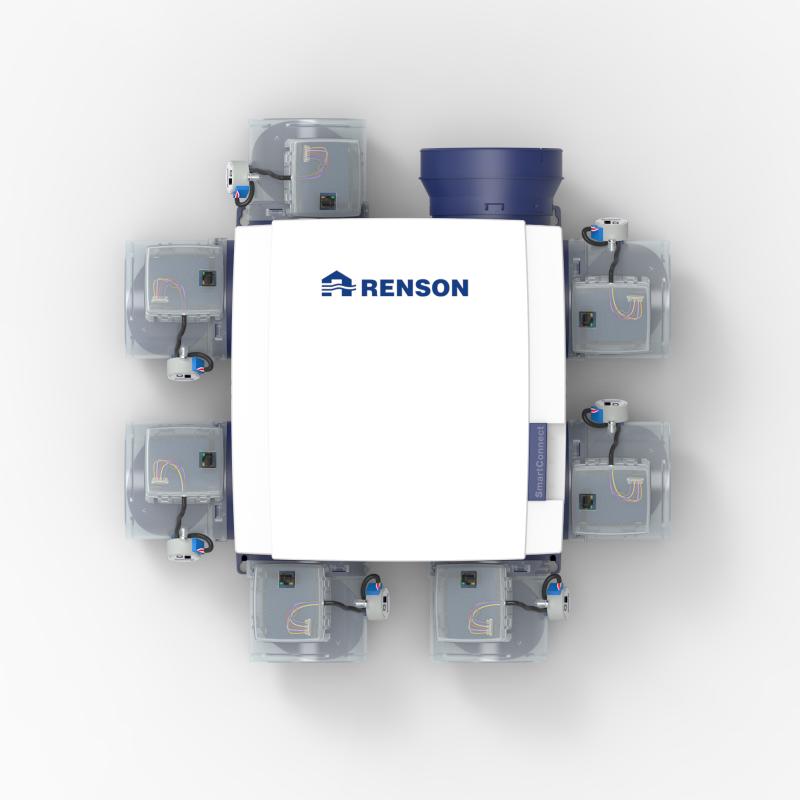
In addition to connectivity, the design of the new ventilation unit also took the acoustics, energy efficiency, and compact installation options into account. Healthbox 3.0 measures barely 20 cm high, is equipped with a new, ultra-energy-efficient and quiet fan, and by using collectors more spaces (max. 11) can be ventilated than just the 7 connections on the ventilation unit.
Renson Endura Delta obtains the ‘Passive House’ certificate
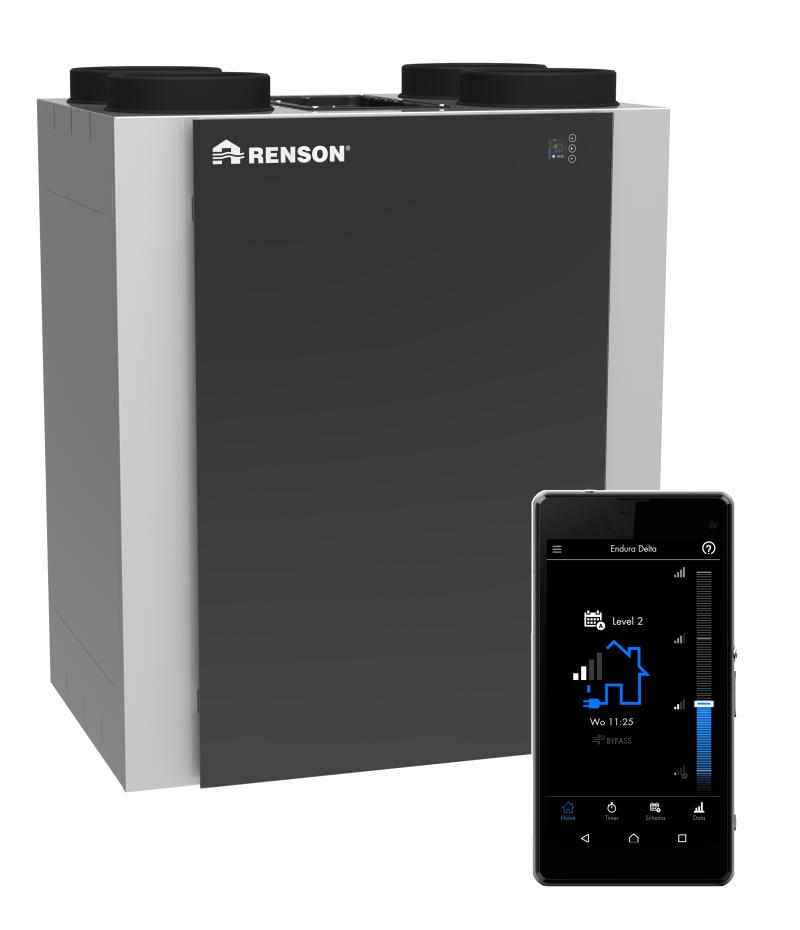
Now that it’s been awarded a ‘Passive House’ certificate, Renson’s Endura Delta balanced ventilation unit can be used in all passive houses. With the Endura Delta, Renson unveils a balanced ventilation unit that offers a lot more than the existing D-systems regarding demand control. And now, with built-in CO2, VOC and humidity sensors, also in the area of balancing ventilation, it is really possible to actually ventilate, based on the needs and living patterns of the residents. And this with the lowest possible energy consumption and the highest possible heat recovery.
‘Passive house-proof’
All of the Renson Endura Delta’s flow variations (330, 380 and 450 m³/h) have obtained the globally recognised ‘Passive House Certificate’. This means that Renson can now provide every passive house with the Renson demand-controlled, balanced venitlation system with heat recovery.
Demand-controlled balanced ventilation with energy benefit
In terms of demand-control, it is unique in its kind. Due to the unit’s built-in sensors that measure humidity, CO2 and VOC in the indoor air 24/7, the Endura Delta adapts its ventilation level to the resident’s lifestyle and needs. This demand controlled system therefore results in a quiet ventilation system that uses very little energy, but is also highly efficient, due to the efficient heat exchanger that recovers up to 89% (measured according to the EN308 standard) of the heat from the discharged ventilation air.
Ease of installation, user friendliness and durability are key
The Endura Delta is available in a version with 4 connections above (for installation on the ground floor or in the basement), and with 2 connections above and 2 below for installation in the attic. The ventilation unit is standard equipped with frost protection in order to guarantee a good indoor air quality, even at cold temperatures. In areas with extreme weather conditions, there is even the possibility to choose a ventilation unit with a pre-heating element, so that even here, ventilation can be optimised as long as possible. A bypass function ensures that the heat exchanger can be bypassed in summer when colder outside air can contribute to cooling the home. As standard, the Endura Delta is equipped with Coarse filters, a PM1 pollen filter is available optionally. Also with all accessories (Easyflex air ducts, Acoudec, roof and wall throughputs and sQair valves) perfectly aligned to the Endura Delta, Renson has all the ingredients for an efficient, complete installation of a balanced ventilation system like this one.
App control for resident and installer
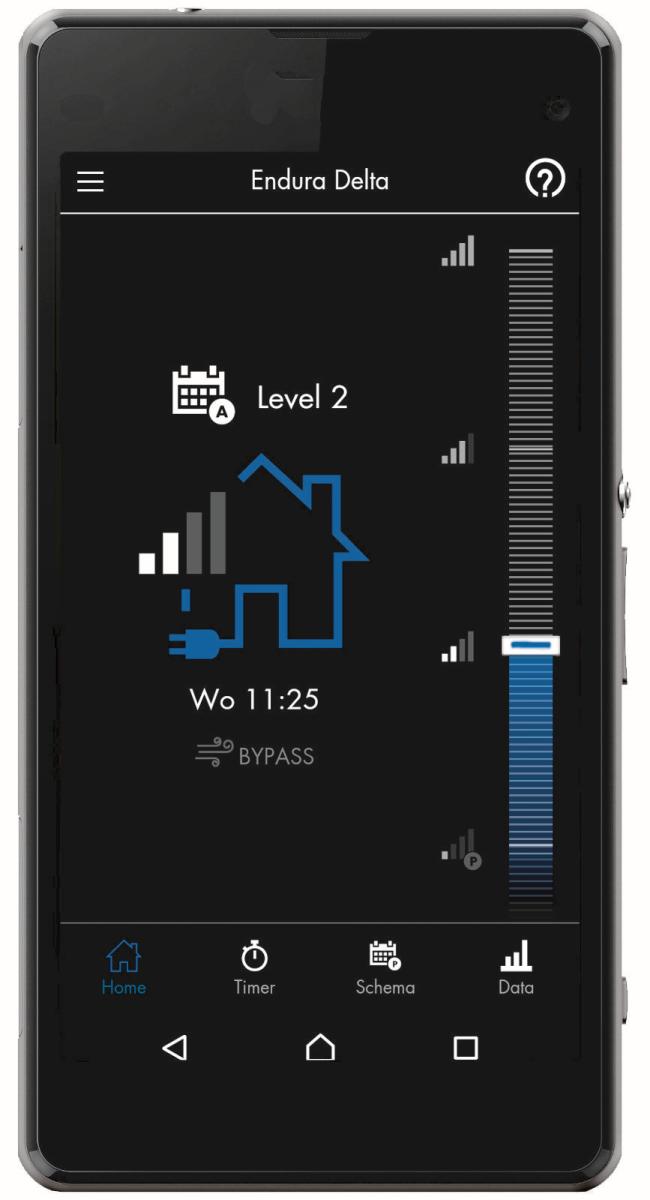
In order to involve the user in the correct operation of the ventilation system, an app was developed (available for Windows, IOS and Android) which enables the user to control the ventilation unit within a home network, program the ventilation level and monitor the general indoor air quality from the smartphone. Moreover, the app also notifies when filters need to be replaced or checked.
The same app allows the installer to quickly and conveniently adjust the balanced ventilation system. It also makes it a lot easier for him to log the air flows and keep all settings per installation organized in function of any subsequent interventions.
Endura Twist decentralized ventilation system with heat recovery
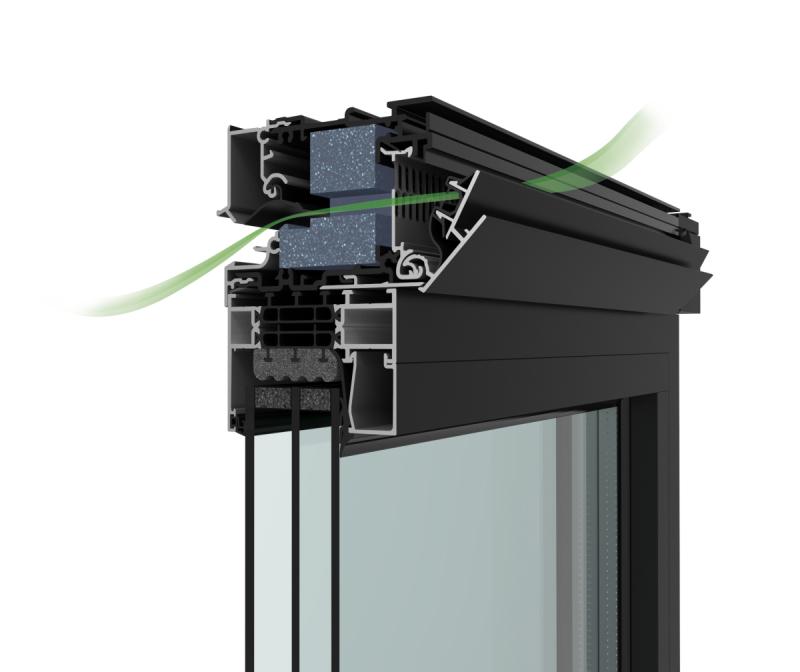
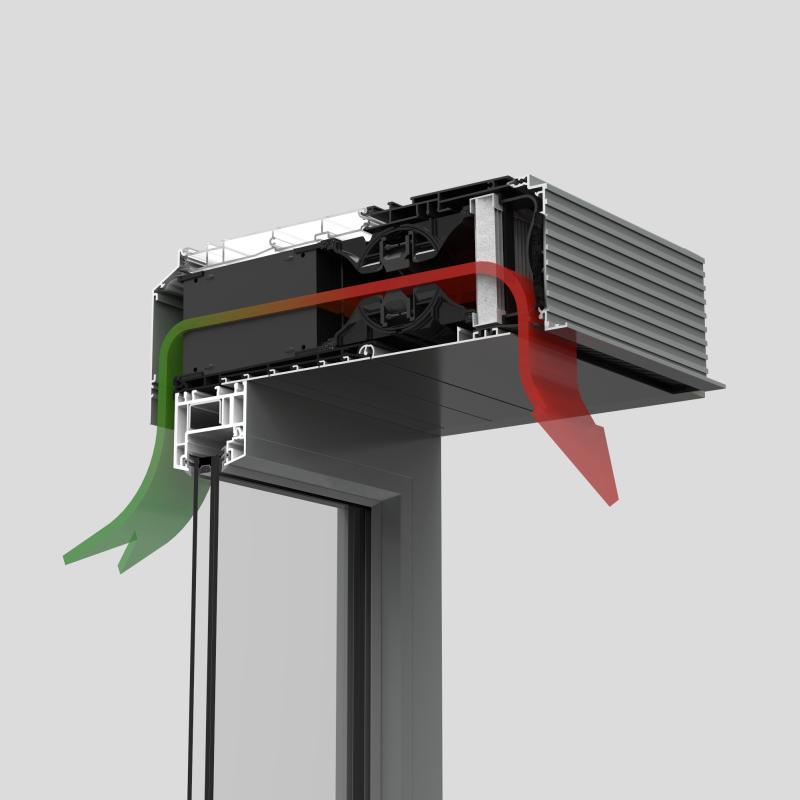
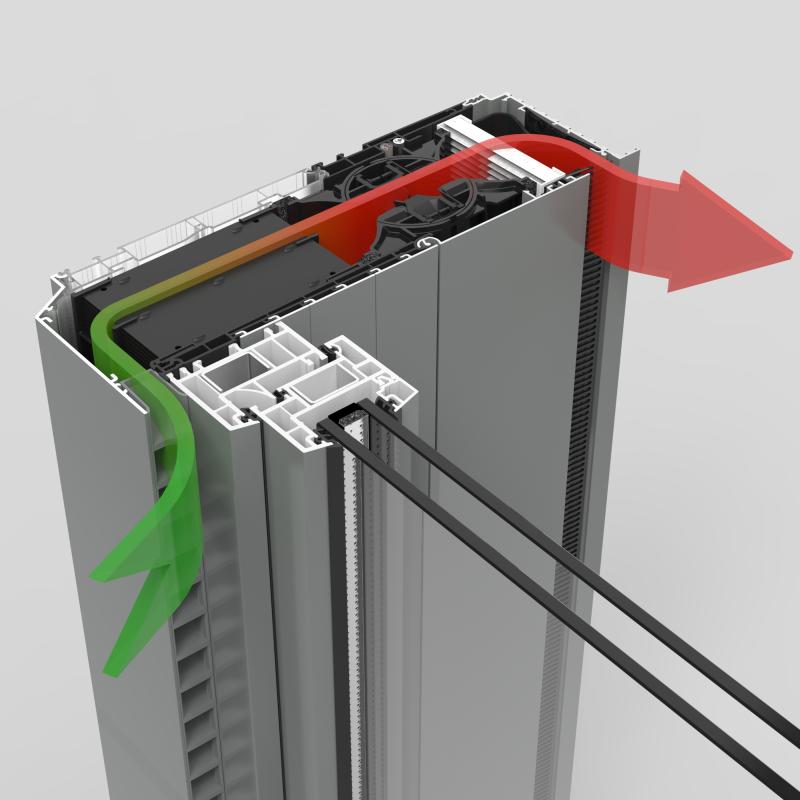
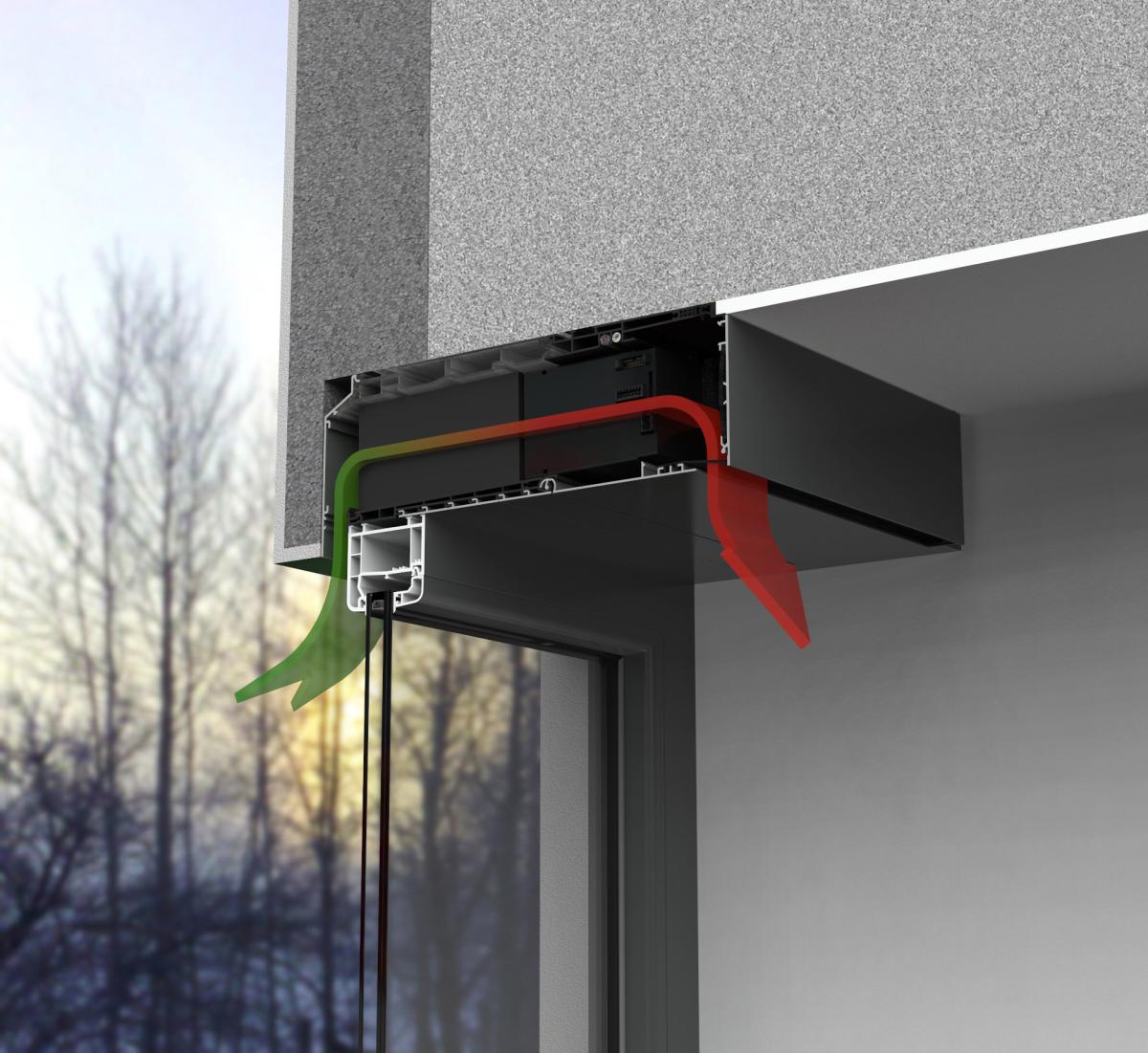
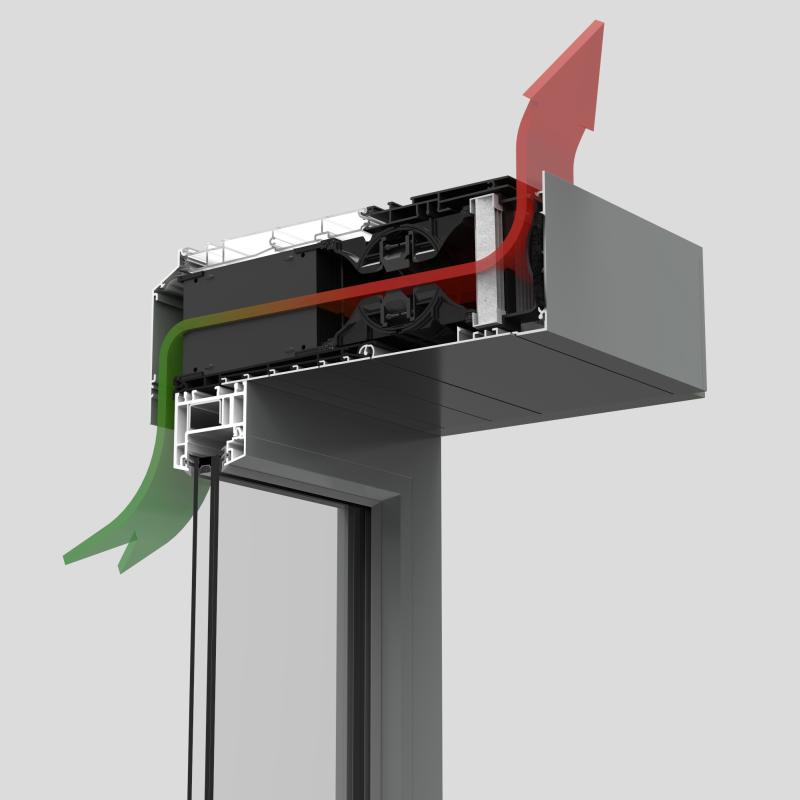
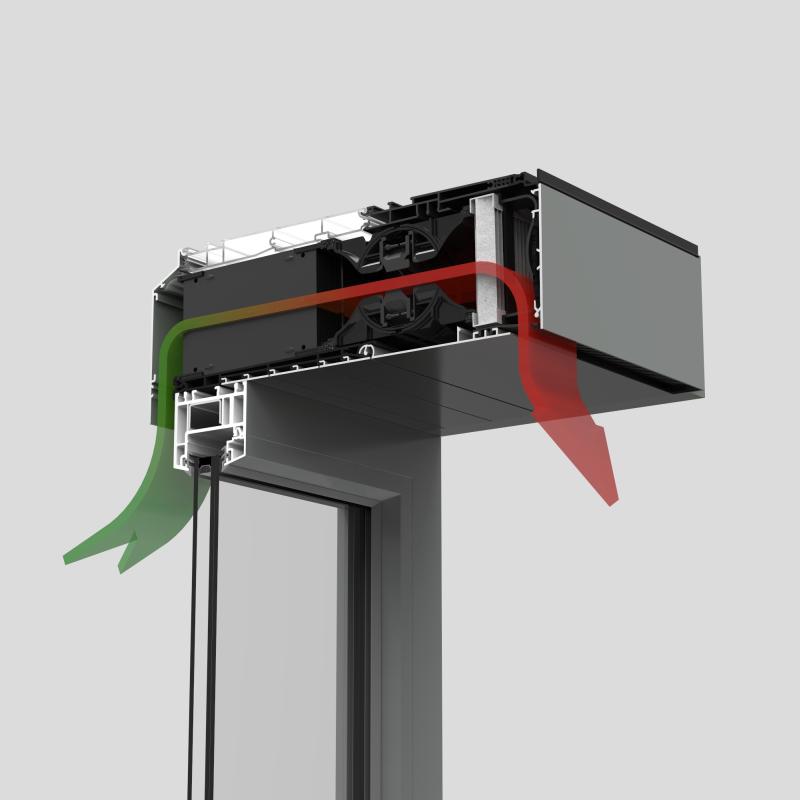
This decentralised sensor-controlled alternating mechanical ventilation system with heat recovery covers a broad range of services with its modular construction. With a heat recovery efficiency of better than 80% at 30 m³/h air output, the system achieves the best efficiency class A+. The integrated bypass technology circumvents the heat exchanger if need be and in this way allows use in summer as an automatic ventilation and extraction system. With a minimum length of only 750 mm, Endura Twist makes it possible to use even very narrow window openings
For renovation and new builds
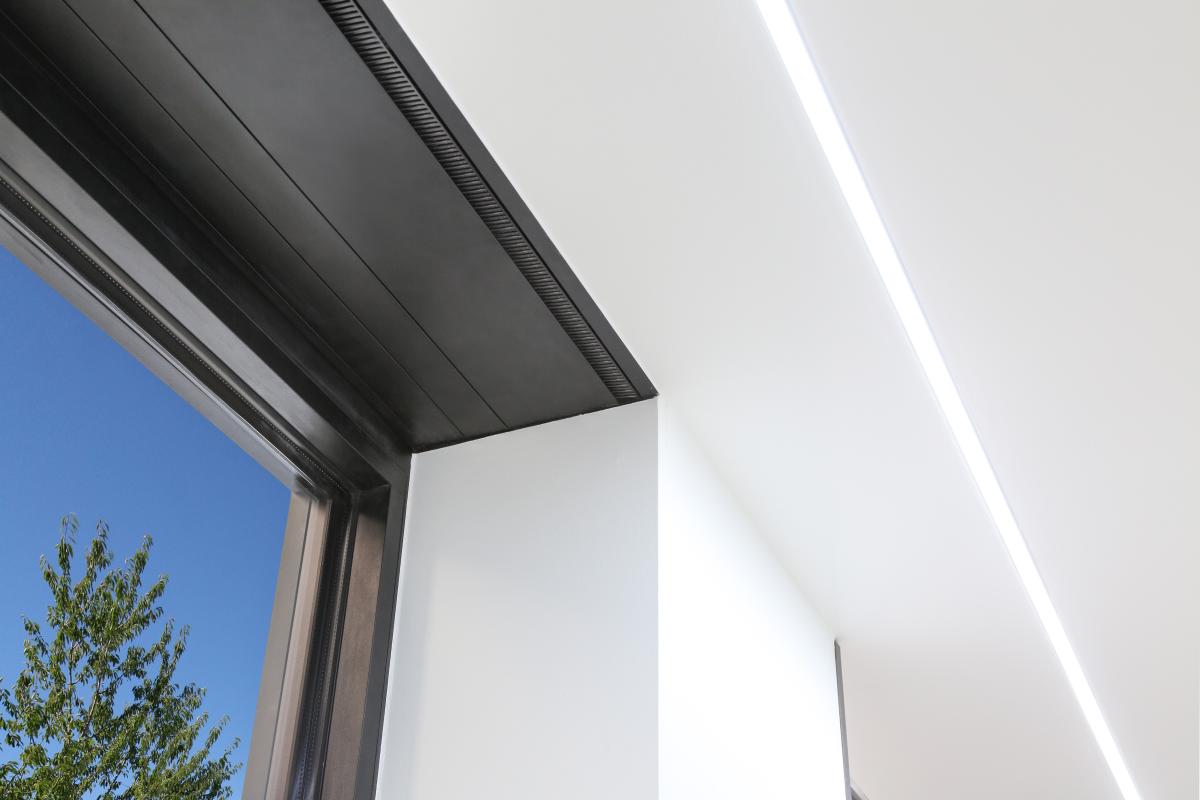
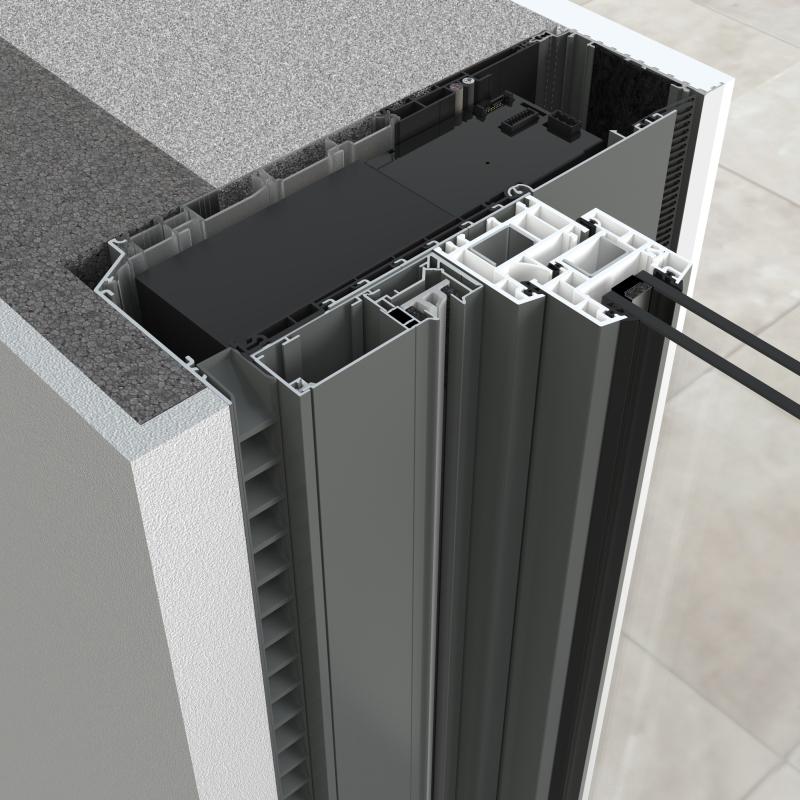
Endura Twist is just as suitable for renovation as for new builds. It can be used as a standalone system, but can also be incorporated into a building management system. It can be installed visibly, clad with drylining systems or plastered, horizontally above a window or vertically to the side of a window. Integration of a vertical sunscreen with ZIP guiding system is possible. With this extensive range of uses, Endura Twist is recommended for all applications in both renovation and new building, which cannot be achieved with a central ventilation system, because of ceiling heights that are too low, for example in residential construction or prefabricated building.
Compact mechanics
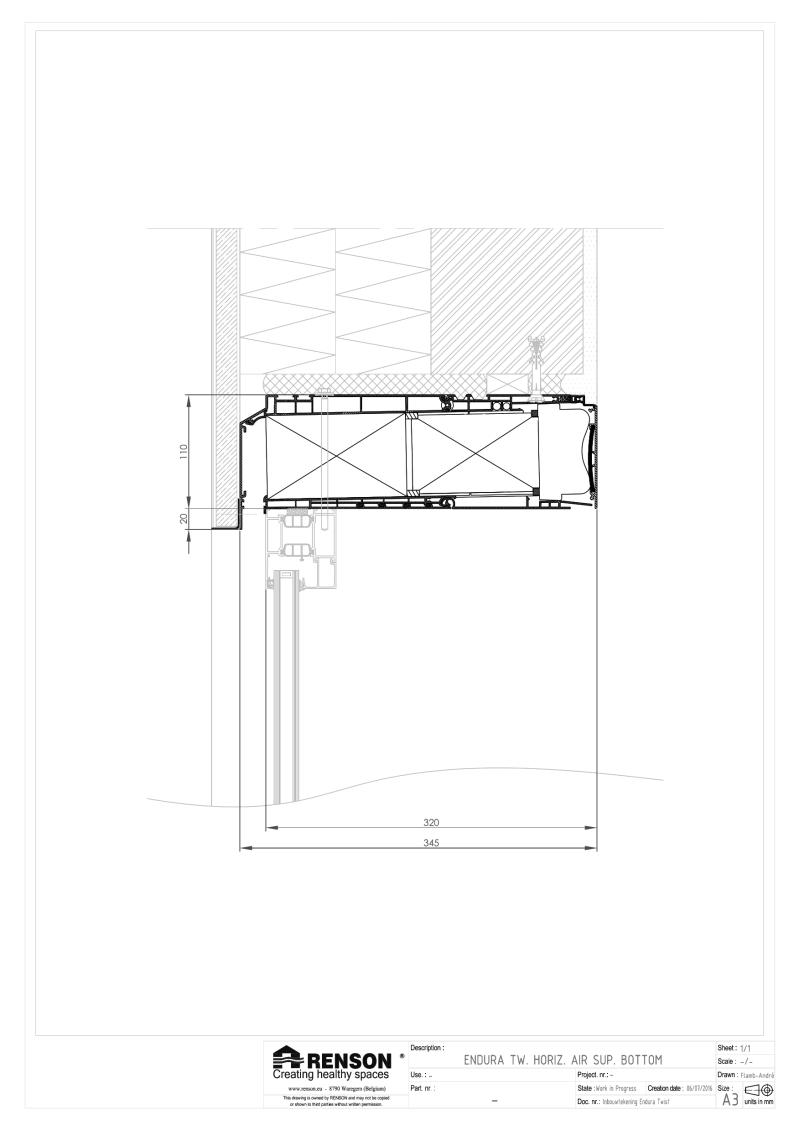
The Endura Twist central unit is only 110 mm high, 345 mm wide and up to 6000 mm long, which means it is also suitable for large sliding window systems or glass fronts. Depending on the installation situation, integrated or visible, various air ducts are possible in the interior: at the top, at the bottom or to the side. The system can be operated without filters, but if necessary can be fitted with G3 filters or F7 fine material filters as well. So that it might be suitable for a very large selection of ventilation requirements, for small and large rooms with few or many windows, Renson has built the ventilation system in a modular design that is used for one to six ventilation modules, according to the ventilation requirement. An air exchange rate of 15 m³/hour per module is achieved. This is how, by using six ventilation modules per window, a nominal air exchange rate of up to 90 m³/hour (in “boost” function, up to 180 m³/hour can be ventilated)
Intelligent control
Renson offers three alternative control systems, tailored to a variety of uses. In Standard, the air exchange rate (fan speed) can be set by keyboard. The alternating system (alternating feed between feed and exhaust air) is in this case controlled by temperature sensors, so that best possible heat recovery is achieved. The optional touch display also includes air quality sensors and thus allows, in addition to heat exchanger temperature control, requirement-driven ventilation via CO2- sensors. The system responds automatically to measured air quality and increases the output if necessary. However, in contrast, if the air quality is good, for example if the residents are absent, it can switch the system off. In a third version, Endura Twist can also be incorporated into a building management system. Endura Twist then receives its control from the building’s central management system.
Endura Twist needs a 230V AC supply for operation. With two installed ventilation modules and an air exchange rate of up to 30 m³/hour, the system, in energy efficiency class A+, consumes only some 4.6 watts.





























Partener Principal
MATEK Build Smart