Plant Operator Aims to Usher in a Technological Transformation in Brazilian Asphalt Production with the RPP 4000 HG
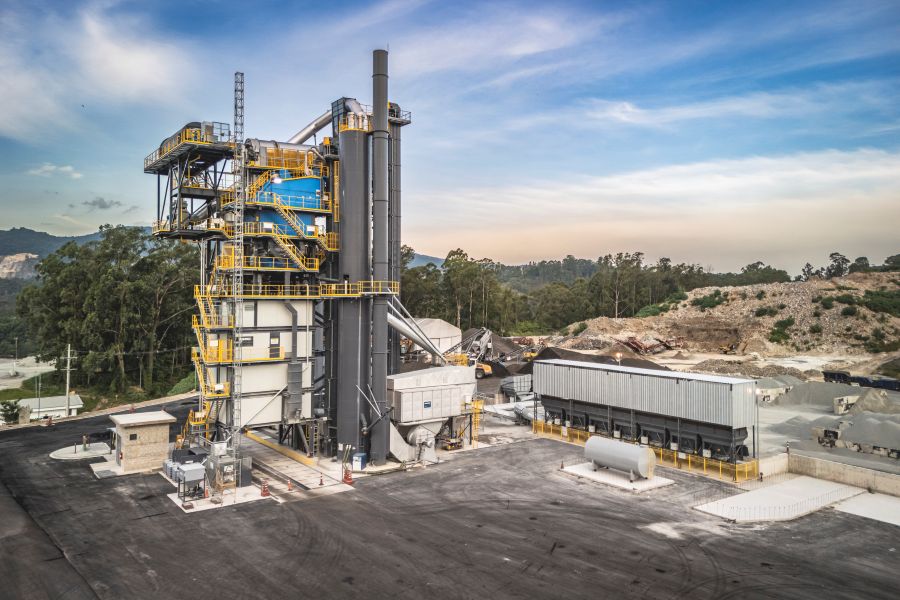
The first RPP 4000 HG recycling plant in the Southern Hemisphere has begun production around 30 km from the center of the city of São Paulo. Usicity, a subsidiary of CITYS and construction and infrastructure company Turita Holding Group, has made the bold decision to invest in groundbreaking technology from Benninghoven that achieves the highest RAP rates and, in addition to maximizing the reuse of construction materials, also significantly reduces CO2 emissions. The high-quality hot-mixed-asphalt (HMA) produced at the plant meets all key requirements for road construction.
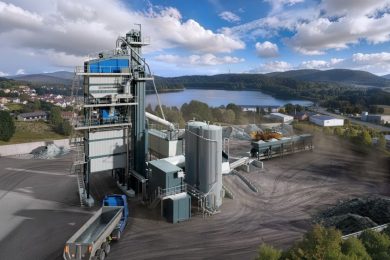
Near São Paulo, an RPP 4000 HG asphalt mixing plant from Benninghoven has become the first of its kind to begin production in the Southern Hemisphere. The plant is considered a benchmark for state-of-the-art, resource-efficient asphalt production and opens up new perspectives for the Brazilian market: high RAP rates, reuse instead of disposal, and a significant reduction in CO2 emissions.
Enormous Market-Potential for Hot-Mixed-Asphalt
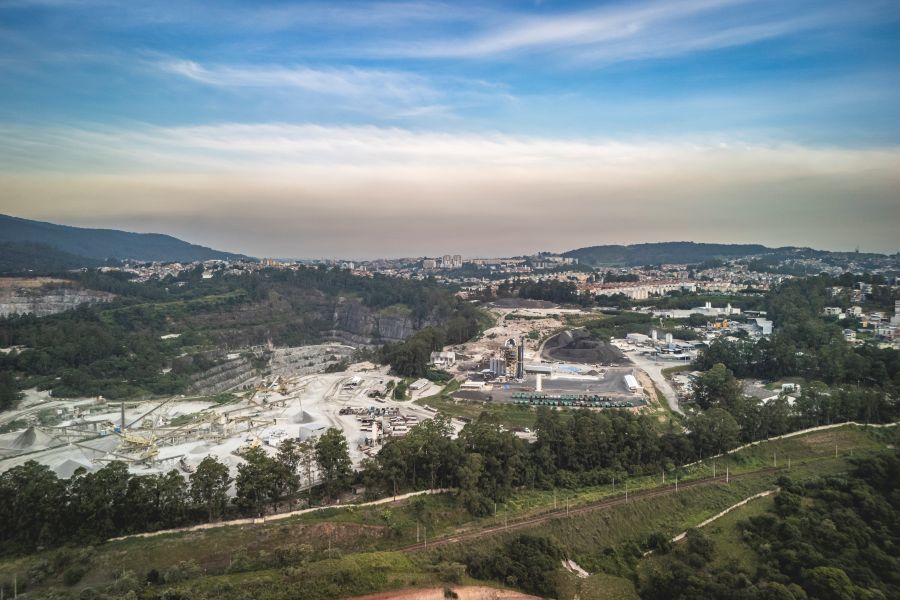
The RPP plant has been set up in the district of Jaraguá, around 30 km from the city center of São Paulo. The metropolitan area with a population of over 20 million has around 17,000 km of roads and urban traffic routes and 1,059 km of highways managed by concession holders and municipalities. The plant operator is therefore planning to raise the production volume to 1 million tonnes of high-quality asphalt per year. This corresponds to six times the production volume of many German asphalt mixing plants. While batch plants with high RAP addition rates are already the standard in Europe, the use of RAP (hot recycling) is still in its infancy in Brazil. Milled asphalt material is often classified as hazardous waste and is generally not returned to the production cycle. Even though the market is increasingly demanding appropriate solutions, there are still reservations about the use of mixes with a high proportion of RAP.
Batch plants precisely dose and mix the individual components in defined batches. This creates a high degree of flexibility as the mixing recipes can be individually adapted to the requirements of the construction site, At the same time, exact dosing and precision control enable the production of particularly homogeneous high-performance asphalt mixes of excellent quality. The new Benninghoven plant demonstrates for the first time on a large scale that reclaimed asphalt pavement (RAP) can be cost-effectively reused to produce high-quality asphalt mixes for a wide range of applications.
High-Performance RPP Plant
The RPP 4000 HG is designed for high production volumes and achieves a mixing performance of up to 320 t – 400 t per hour. The customer runs the plant with a daily production volume of 4,000 to 5,000 t. The hot gas generator technology enables RAP addition rates of up to 100%. In combination with a dual fuel burner for heating oil and liquefied gas, the plant is designed for both cost-efficient continuous operation and the production of special mixes. These include various types of asphalt mixes for paving infrastructure ranging from freeways and airport runways to classical urban streets. The infrastructure requirements for this project are ideally fulfilled: a quarry and a large RAP stockpile are located directly next to the plant.
Quality is a decisive factor when it comes to market-acceptance of mixes with high proportions of reclaimed asphalt pavement (RAP). The RPP 4000 HG enables the realization of specially tailored recipes. Homogeneity, durability, ride comfort, and safety are confirmed by regular laboratory tests. The plant thus fulfills key requirements for resource-efficient road construction.
Investments in Forward-Looking Technologies
The RPP 4000 HG is designed with long-term development in mind. It already fulfills the emissions standards of the next 30 years. A next step foresees the use of hydrogen as an energy source. To accommodate this goal, Benninghoven has developed the world’s first burner generation that can also be fueled exclusively with green hydrogen. The technology can be used in new plants or as a Retrofit solution for existing asphalt mixing plants, which means that plant operators can switch to the new fuel at any time.
Partnership and Innovative Thinking as Drivers of Change
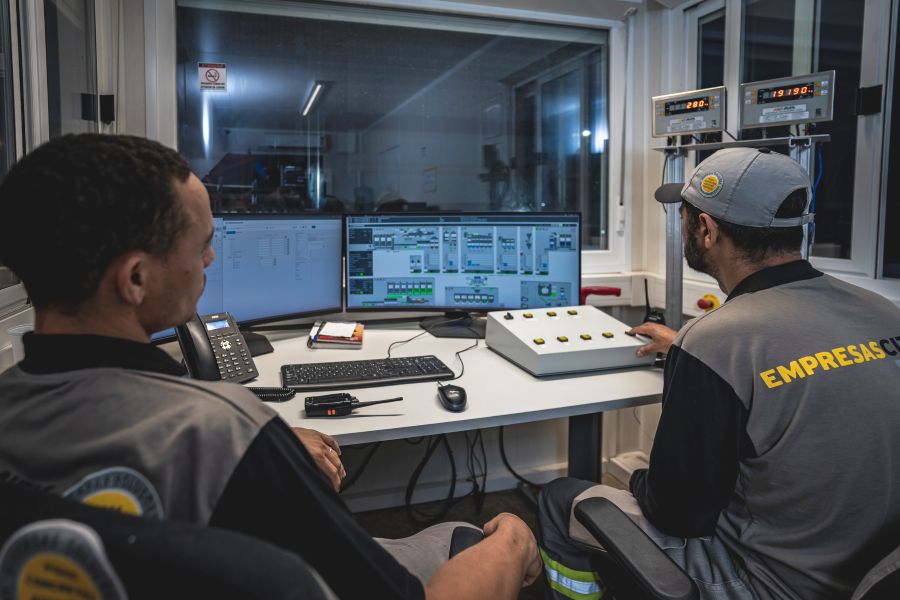
Close collaboration between the Brazilian company, Ciber, and Benninghoven served as a firm basis for the successful start of the plant. The employees received in-depth training in advance. The training focused on the BLS 4 control system, including the recipe generator – two key components for the safe and efficient running of the plant. “Implementing a project of this magnitude at the other end of the world comes with a range of widely differing challenges. Thanks to the dedicated work of the entire Benninghoven team and the excellent collaboration with our partner Usicity, we were able to successfully overcome each of these challenges,” reported Technical Director Daniel Siebrecht and Head of Project Management Christian Bode from Benninghoven.
A Role Model and a Trailblazing Project for South America
The new plant in São Paulo is currently exceeding the operator’s expectations, confirming that the choice of the RPP 4000 HG was the right decision and perhaps even marks the onset of a technological paradigm shift in Brazilian asphalt production. www.wirtgen-group.com
Click here to play the video.
You can find more videos on the Wirtgen Group YouTube Channel.






















Partener Principal
MATEK Build Smart